A marvel of Thuringian glassmaking, circa 1860–1920
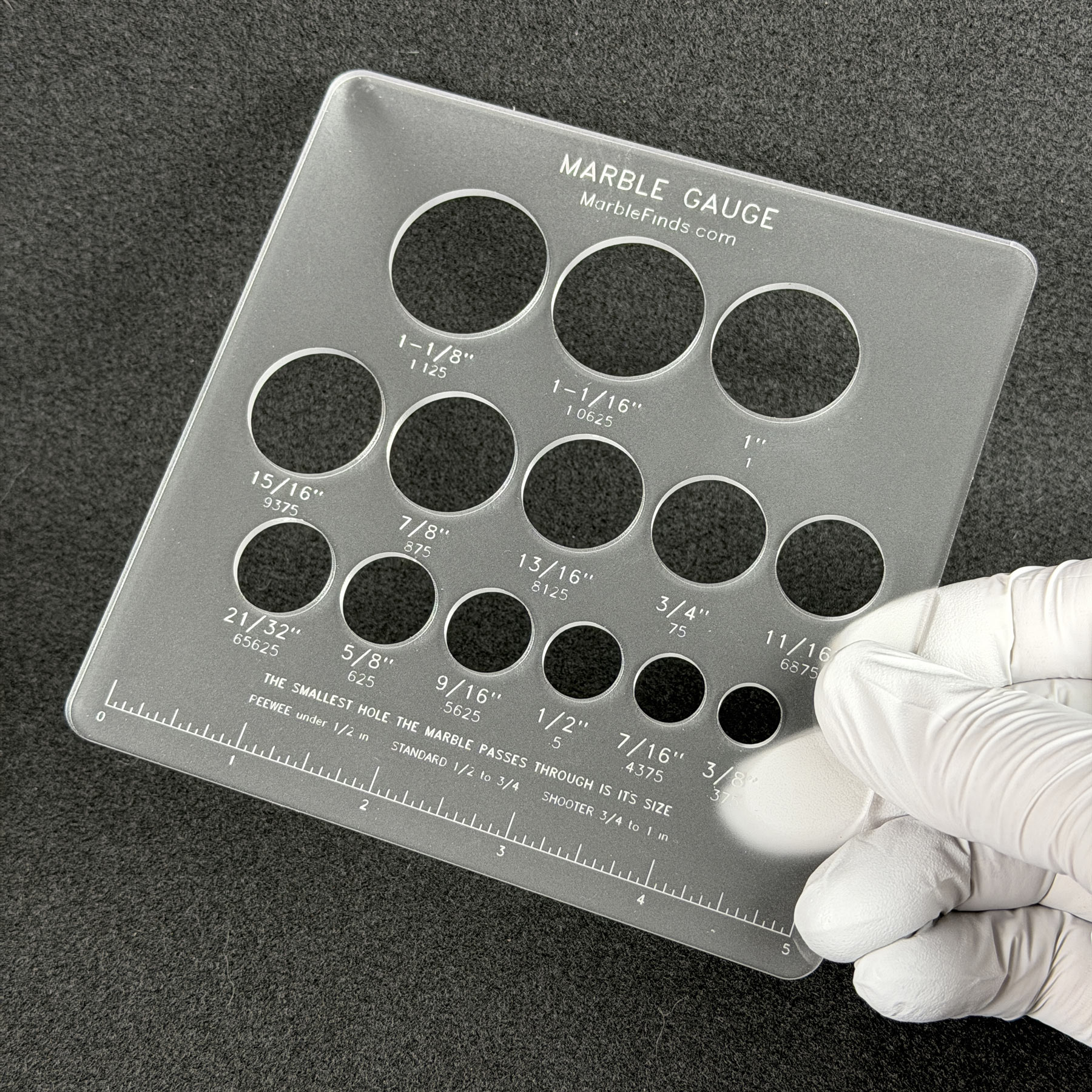
| Size 31/32″ |
Condition Near Mint(−) |
Origin Lauscha, Germany |
Circa 1850–1880 |
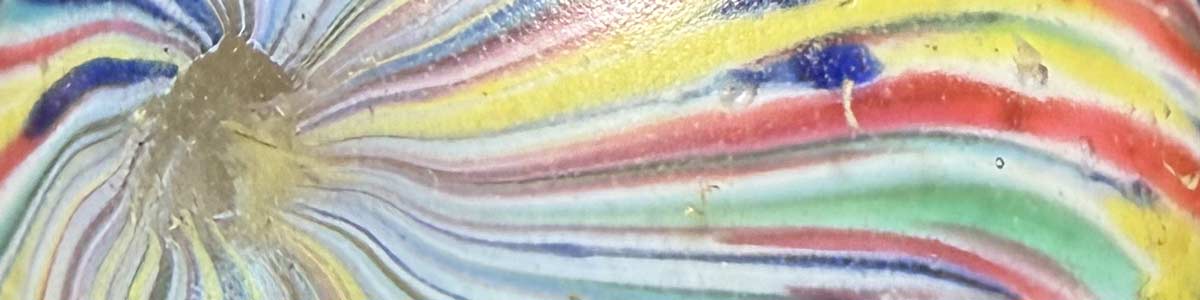
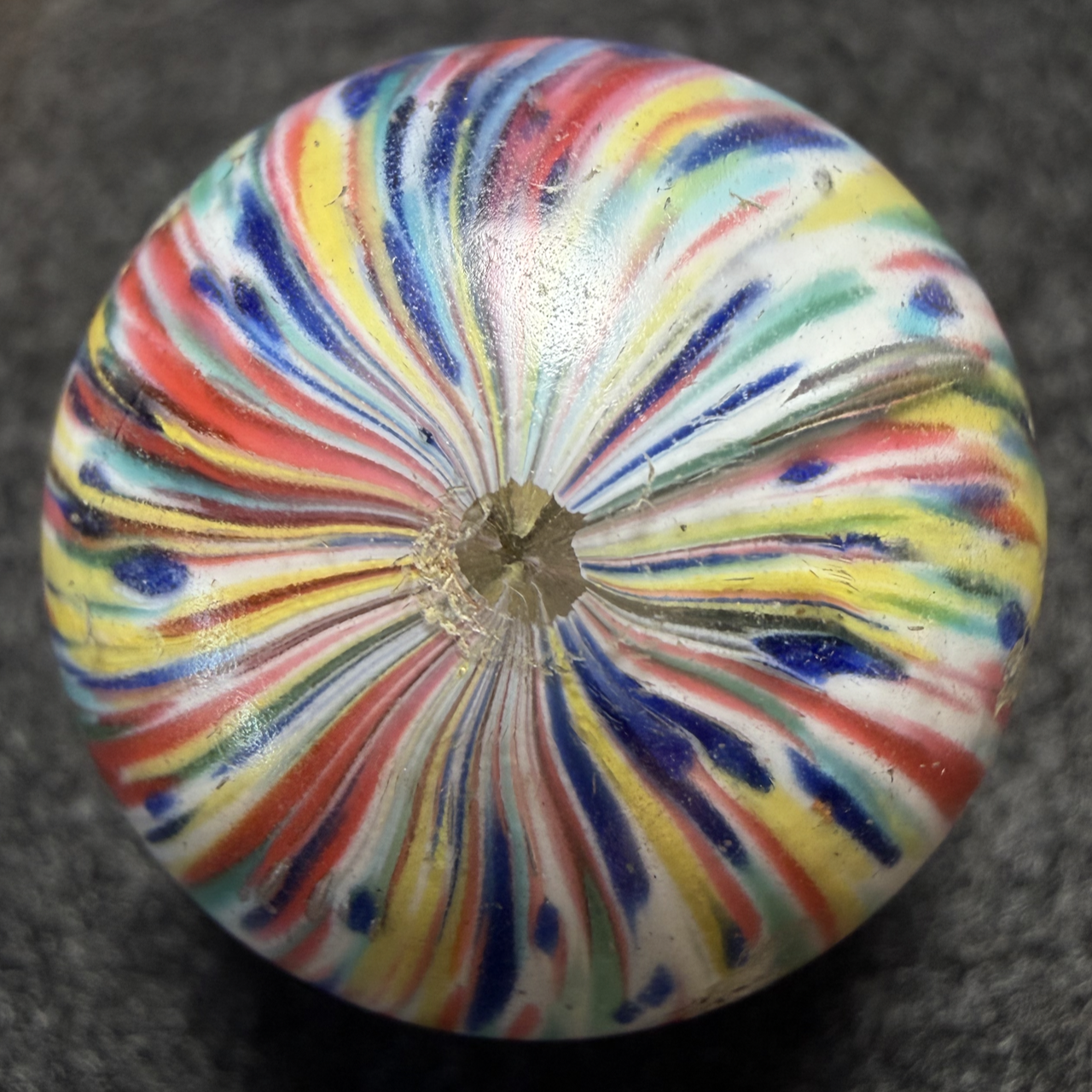
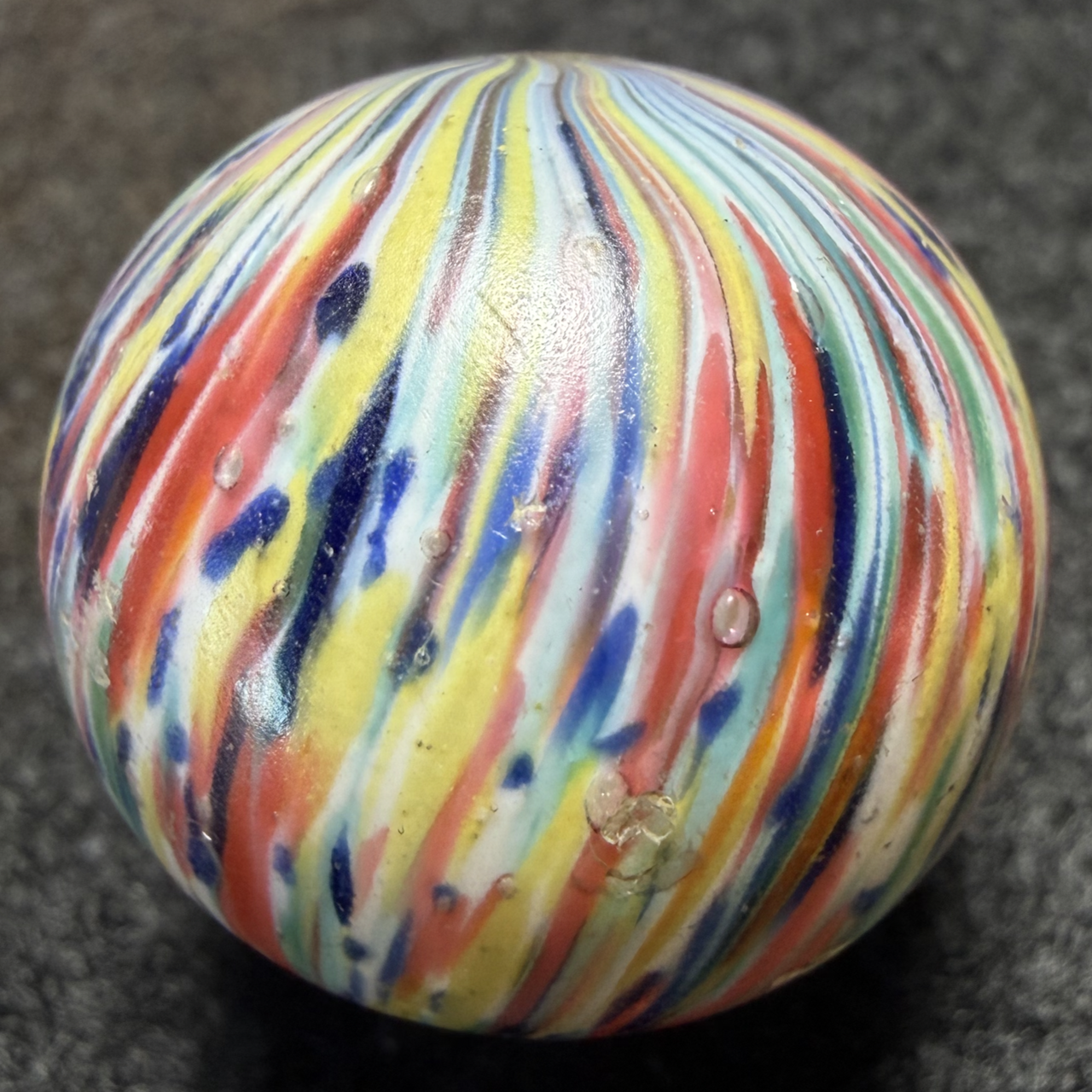
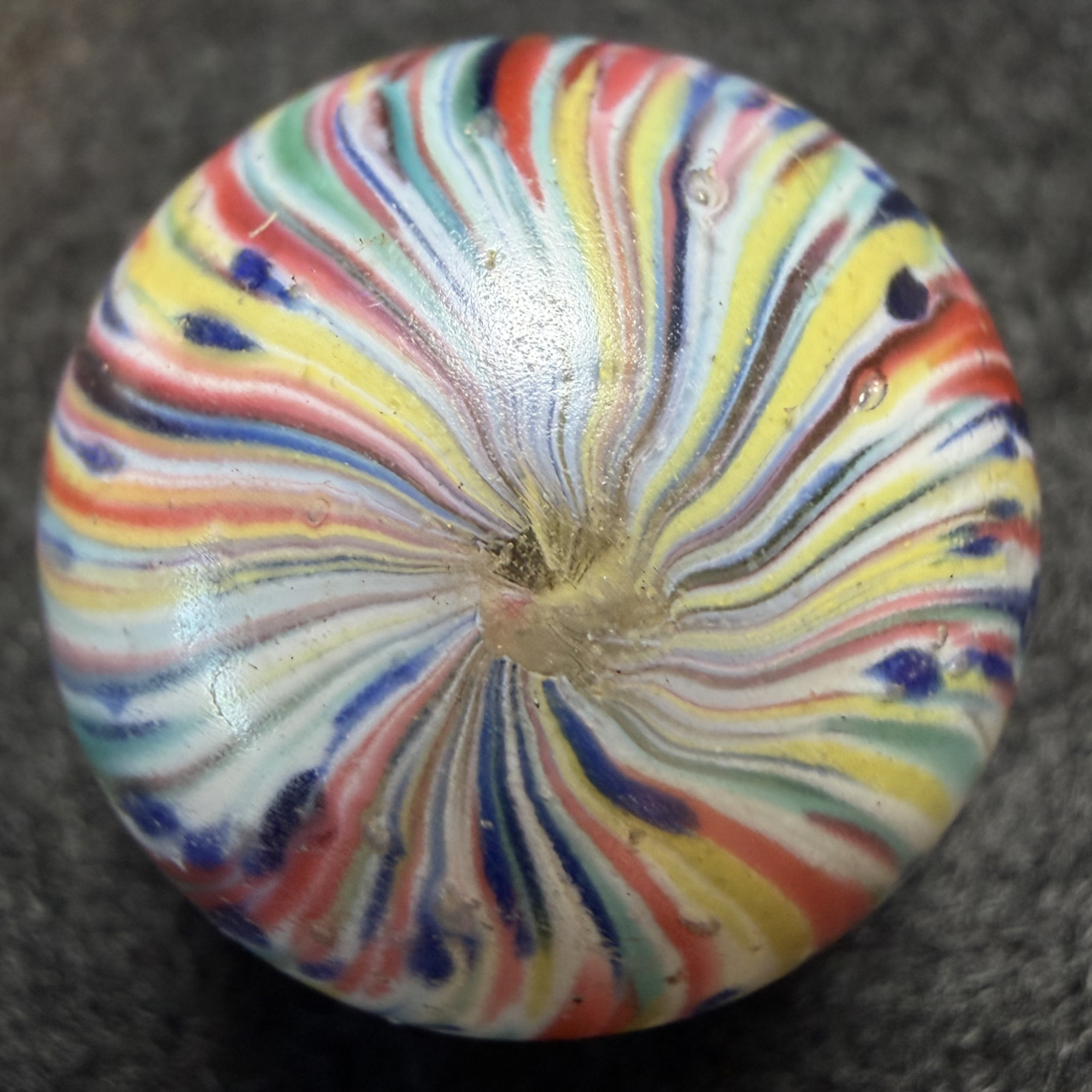
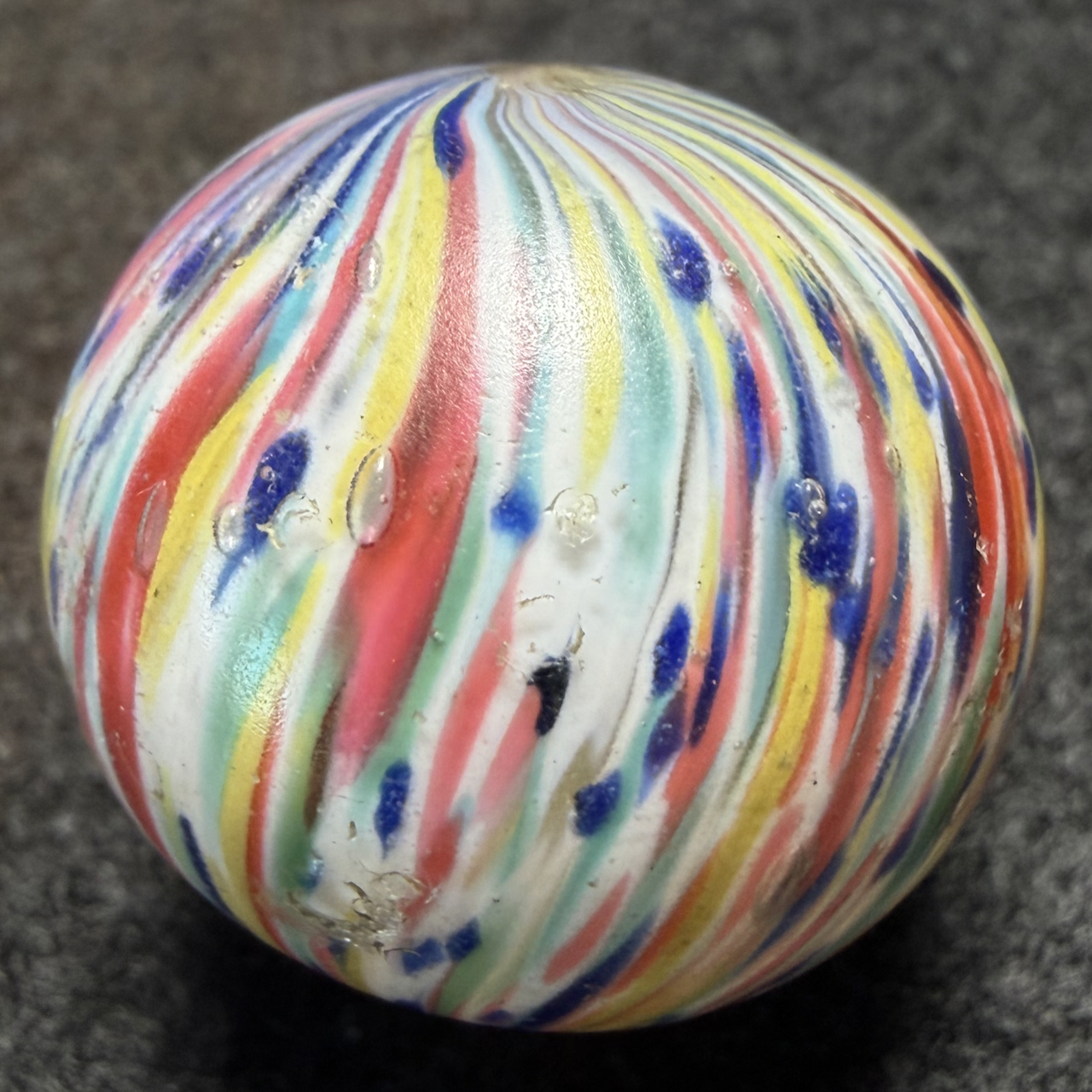
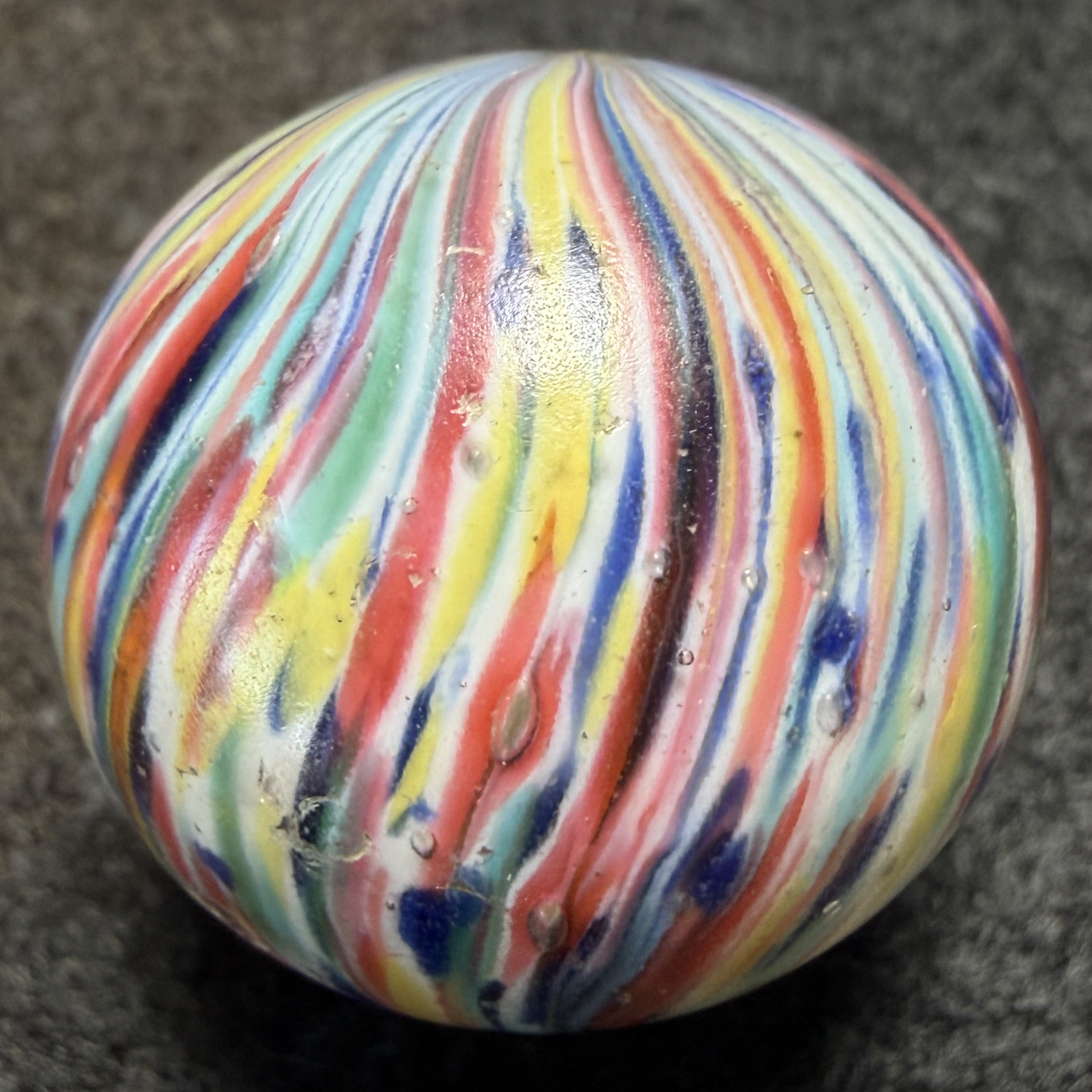
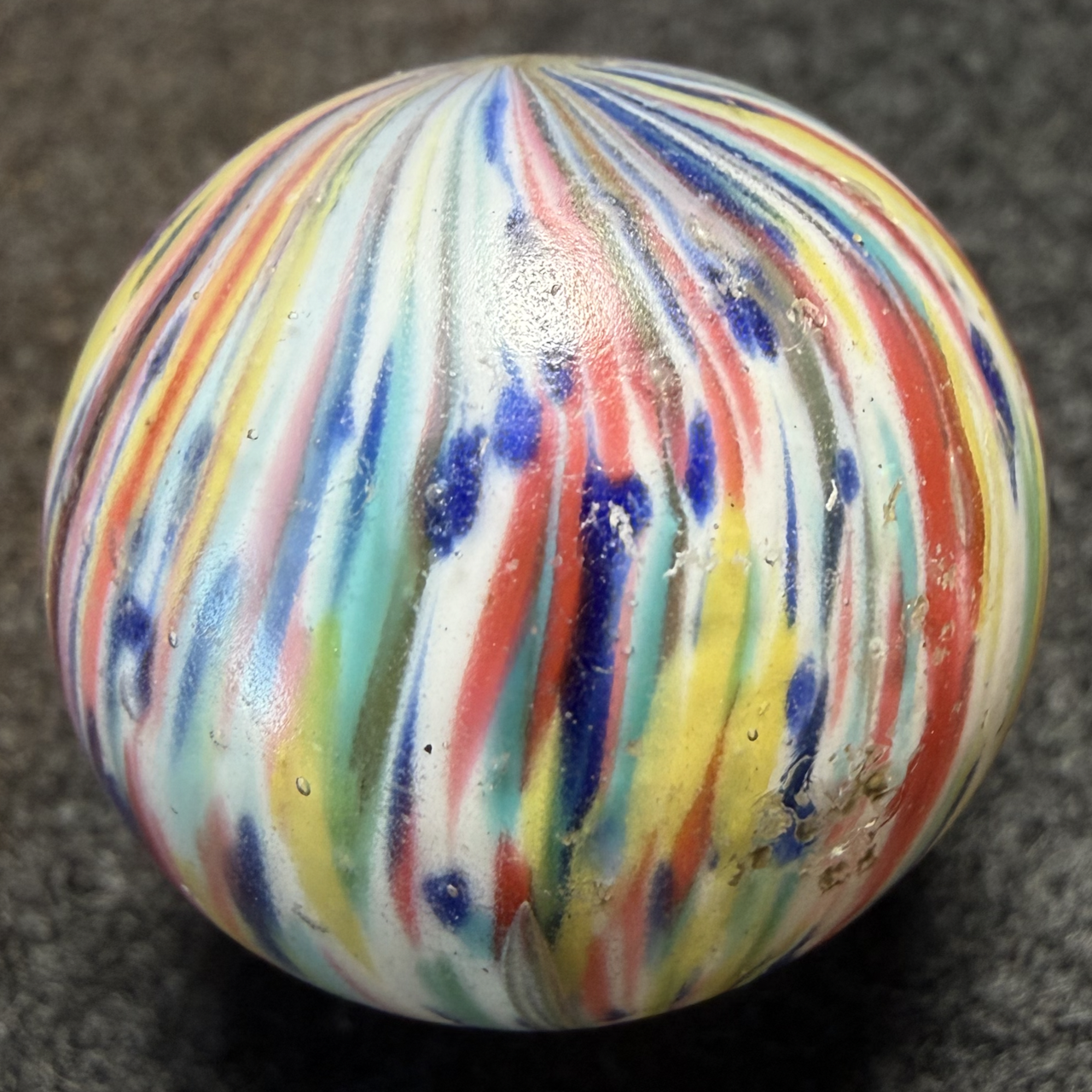
This is a Clown Onionskin, one of the most celebrated and immediately recognizable variants within the End of Day family. The designation comes from the color palette: bright, saturated spots of red, blue, green, and yellow applied over an opaque white base, then sealed under a clear outer casing. No two are alike. The color placement is uncontrolled by design, which is precisely the point.
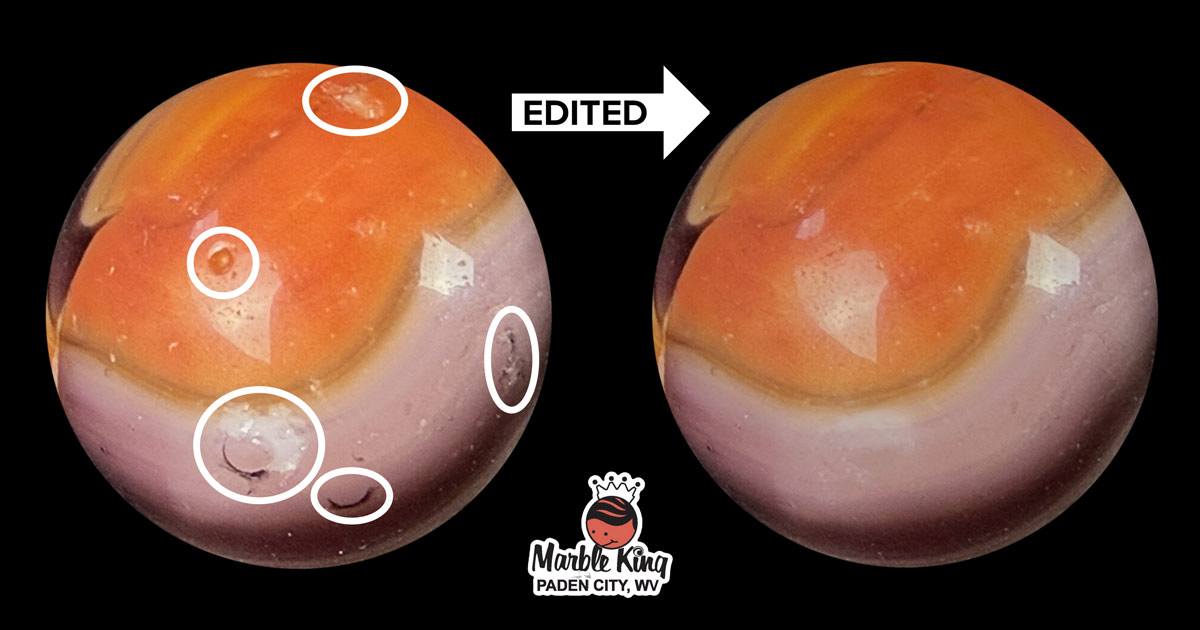
At 31/32″ this example sits well above the typical size range for the type. Most onionskins of this era come in between 9/16″ and 7/8″. Anything approaching a full inch is uncommon. This one clears that threshold and that alone elevates it among its peers. This marble includes a large manufacturing melt touch spot and several tiny chips.
The ‘clown’ designation is sometimes debated, with stricter collectors looking for five or more distinct colors and visible reaction outlining that adds contrast and definition.
Construction
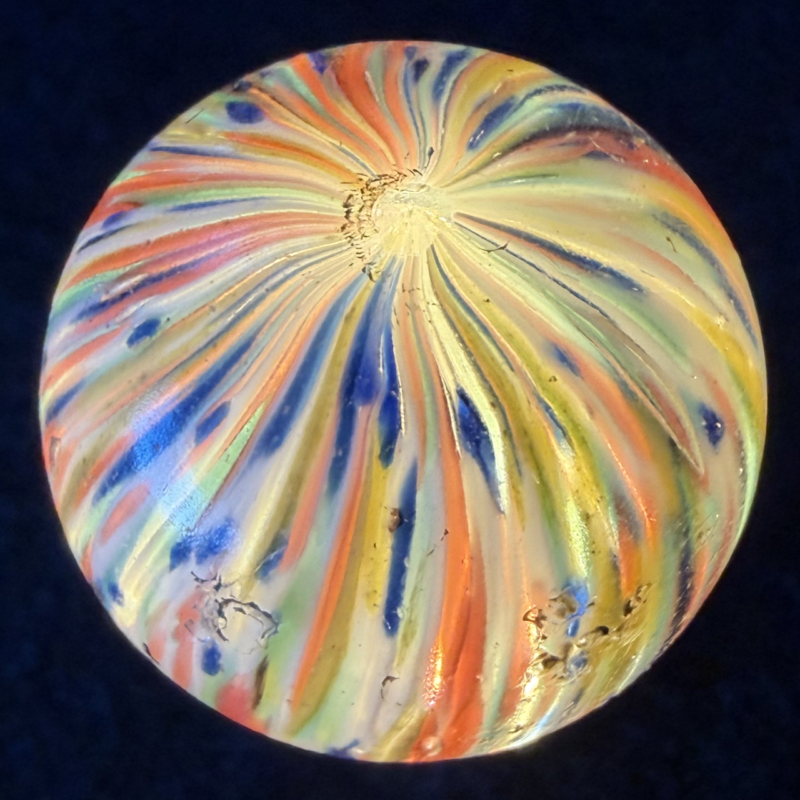
Backlit EOD Clown Onionskin
Onionskins are single-gather marbles, meaning they were built up on the end of a punty rod rather than cut from a pre-made glass cane. The glassworker began with a clear core, applied an opaque white or yellow base layer, then worked individual spots of color directly onto that surface.
In a Clown, the colors were applied as discrete, unmixed dots rather than being drawn into continuous lines. The entire assembly was then encased in a final layer of clear glass before being shaped and cut free.
The faceted pontil visible on this example is a reliable dating indicator. German glassworkers faceted their pontils during the earliest production period, roughly 1850 to 1880. After around 1880, factories dropped the practice to increase output, leaving rough unfinished pontils instead. A faceted pontil means this marble was made in the first generation of German handmade glass marble production.
The Colors
- Bright red
- Cobalt blue
- Bright green
- Yellow
- Opaque white base on a transparent core
These are the four defining colors of the Clown variant. All four present on a single marble with strong saturation and clear separation is what collectors look for. Muddy or blended color reduces both the visual impact and the value. This example shows clean, distinct placement across the surface.
The German craftsmen of Lauscha called these speckled marbles. The name Clown came later, coined by collectors who recognized the unmistakable resemblance to circus colors.
Historical Context
Glass marble production in Lauscha, in the Thuringian Forest region of Germany, began in earnest around 1850 following the invention of the marble scissors by Elias Greiner. These were specialized shears that allowed a glassworker to cut and shape a gather of molten glass into a sphere. The onionskin was among the earliest types produced and required a higher level of skill than cane-cut marbles, which is reflected in their relative scarcity today.
Lauscha had been a glassmaking center since the late 1500s, with a documented glassworks established there in 1597. The families who developed marble production, primarily the Greiners, the Mullers, and the Kuhnerts, drew on generations of glassworking knowledge to develop the color application techniques seen in examples like this one. By the time German marble exports peaked in the 1880s and 1890s, Lauscha and the surrounding villages represented the dominant source of glass marbles sold throughout the United States and Britain.
World War I ended German marble imports into the United States. By the early 1920s, American machine production had taken over the market. The window for marbles of this construction type was roughly 70 years, and the Clown Onionskin represents some of the finest and most expressive work from that period.
Send an Offer for this Marble
While this marble is not neccesarily for sale we are always open the entertaining offers.
Make an Offer for this German EOD Clown Onionskin marble.