$5.95 Flat Shipping
Contiguous US, any order size
Ships in 1 Business Day
After confirmed payment
Insured & Tracked
On every shipment
7-Day Inspection Period
Examine it before you commit
Secure Checkout
Encrypted payment
Onionskins
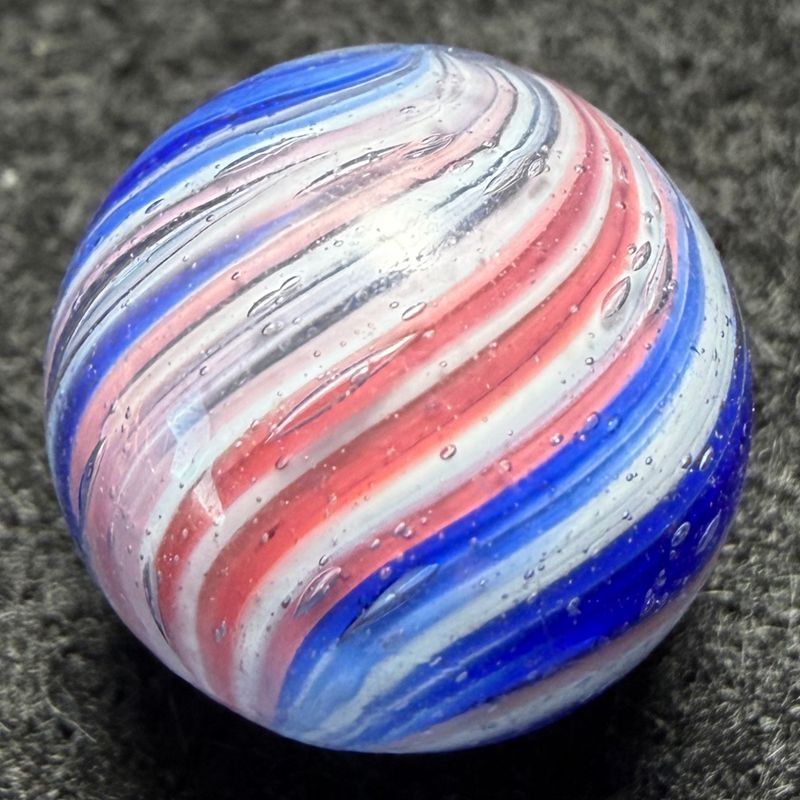
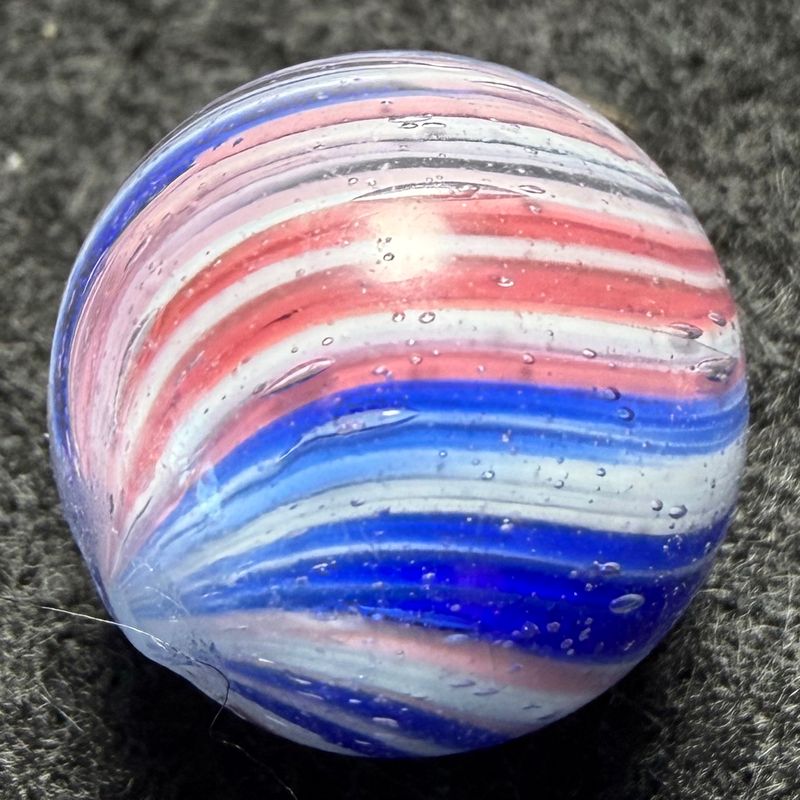
Onionskin marbles are among the most sought-after German-made types. The construction starts with a clear glass core, over which a layer of opaque white or yellow glass is applied with color worked into it. The whole assembly is then sealed in a clear outer casing. Viewed from the pontil, light passes through, revealing the layered interior that gives the type its name.
Common base colors are white and yellow. Surface colors run the full range, with red, blue, green, and orange most typical. More colors generally means more value.
Notable variants:
- Paneled - color arranged in distinct panels around the marble, 2 to 4 panels most common
- Lobed - indentations pressed lengthwise before casing, creating a ribbed profile; genuinely scarce
- Mica - mica flakes incorporated into the skin layer; demands a premium
- Lutz - metallic copper flakes added to the skin; highly sought
- Left twist - counterclockwise rotation when viewed from the pontil; always a premium
Sizes run from peewee under 1/2" through standard range. Anything over 1" carries a premium, and examples approaching 2-1/2" are among the most valuable handmades in the hobby. Circa 1850 to 1915.